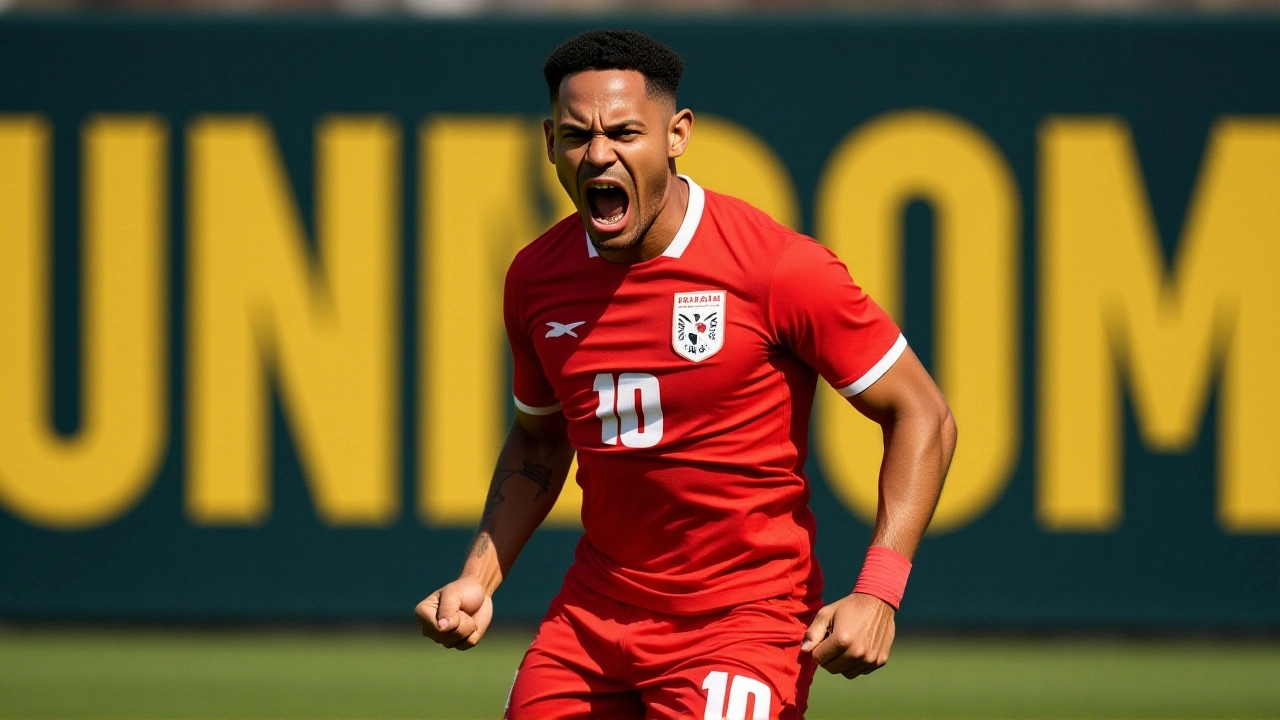
When the final whistle blew at Estadio Rommel Fernández on October 14, 2025, neither Panama nor Suriname could claim victory—but both walked away with something far more valuable: a shared lead in the race for the 2026 FIFA World Cup Qualifying - Concacaf. The 1-1 draw, sealed by a last-gasp equalizer in the 96th minute, kept the two teams locked at the top of Group A with six points each, turning what could’ve been a decisive win into a high-stakes stalemate that’ll echo through the final qualifying window.
A Match That Refused to End
It started with Suriname striking first. In the 21st minute, Richonell Margaret turned a botched Panamanian free kick into a counterattack nightmare. Tjaronn Chery raced down the left flank, slipped a low cross into the box, and Margaret buried it past Orlando Mosquera at the near post. The goal stunned the home crowd. Suriname, a team that hadn’t won a World Cup qualifier since 1998, suddenly looked like they might pull off the unthinkable.Panama, however, refused to fold. They pressed. They passed. They chased shadows. For 70 minutes, they controlled possession but couldn’t break through a disciplined Surinamese backline. The visitors, led by head coach Tomas Christensen, sat deep, absorbed pressure, and looked dangerous on the break. It was the kind of match where every tackle mattered, every clearance felt like salvation.
The Miracle in the 96th Minute
Then, with the clock past 90 minutes and the stadium holding its breath, came the moment that defined the night. Azarías Londoño delivered a curling cross from the far side. It hit Ismael Díaz square on the chest. The ball rolled down his leg, wobbled past the outstretched arm of Suriname’s keeper, and slipped—somehow, impossibly—into the back of the net. The stadium erupted. Players collapsed. Fans wept. It was the kind of goal that lives in highlight reels for decades."It wasn’t pretty," admitted Díaz afterward. "But it was ours. And in this group, you take what you can get."
Why This Draw Matters More Than a Win
With the result, both teams sit at 1-3-0 in Group A: one win, three draws, zero losses. Suriname leads on goal difference (+1 to Panama’s 0), but the gap is paper-thin. Guatemala sits just one point back at 5, and El Salvador, despite three draws, remains in the hunt. This isn’t just a tie—it’s a pivot point.Suriname’s rise has been one of the most compelling stories in Concacaf this decade. Thanks to a 2023 change in local nationality law, the team has drawn heavily on Dutch-born players with Surinamese heritage. Chery, Margaret, and others weren’t born in Paramaribo—but they chose to wear the green and gold. "This isn’t just about football," said Tomas Christensen after the match. "It’s about identity. We’re proving that a small nation can compete with giants if it believes in itself."
Panama, by contrast, has long been the region’s traditional powerhouse. They’ve qualified for two World Cups before (2018, 2022). But this cycle has been messy. Injuries, inconsistent form, and a shaky defense have made them vulnerable. The draw wasn’t a failure—it was a lifeline. Without Díaz’s goal, they’d be in danger of falling behind Guatemala. Instead, they’re still alive.
The Final Two Games: A Two-Horse Race
The next matchday, November 13, 2025, will decide everything. Suriname hosts El Salvador at home—a game they’re expected to win. Panama travels to Guatemala, a team that’s been surprisingly resilient but lacks the firepower to dominate. Win for Suriname? They’re likely in. Win for Panama? They leapfrog into first on goal difference."It’s not about who’s better," said former U.S. national team captain Claudio Reyna in a post-match analysis. "It’s about who cracks under pressure. Suriname’s got momentum. Panama’s got history. One of them will break. And it’ll be ugly."
What’s Next? The Human Cost of the Dream
Behind the stats and standings are the people. The Surinamese players who left the Netherlands to represent a country they barely remember. The Panamanian fans who traveled 3,000 miles to watch their team play, many sleeping on buses for 48 hours to get to Panama City. The 12-year-old in Paramaribo who now dreams of scoring the winning goal in a World Cup. This isn’t just qualifying. It’s belonging.On November 13, one of these teams will take a giant step toward Qatar 2026. The other? They’ll have to wait, wonder, and hope for a playoff spot. But for now, in the quiet after the final whistle, both nations share something rare: the belief that maybe, just maybe, this is their time.
Frequently Asked Questions
How did Suriname qualify so many Dutch-born players for the national team?
In 2023, Suriname passed a new nationality law allowing dual citizenship for descendants of Surinamese immigrants living abroad, particularly in the Netherlands. This opened the door for players like Tjaronn Chery and Richonell Margaret, who were born and raised in the Netherlands but have Surinamese ancestry, to represent the national team without renouncing their Dutch passports. The move dramatically increased the talent pool and is credited with Suriname’s sudden rise in Concacaf.
Why is Panama struggling despite being a traditional Concacaf power?
Panama’s recent struggles stem from aging core players, inconsistent club performances abroad, and a lack of depth in midfield. Key figures like Rommel Fernández and Blas Pérez have retired, and younger replacements haven’t fully stepped up. Their defense, once rock-solid, has conceded in every qualifying match this cycle. They’re relying on experience and moments of individual brilliance—like Ismael Díaz’s goal—to stay alive.
What’s at stake for the November 13 matches?
The winner of either Suriname vs. El Salvador or Panama vs. Guatemala will likely clinch automatic qualification for the 2026 World Cup. The loser will drop to fourth place and face a playoff against the third-place team from another group. With only two automatic spots available in Concacaf’s final round, these are essentially elimination games disguised as qualifiers.
Has Suriname ever made it to a World Cup before?
No. Suriname has never qualified for a FIFA World Cup finals tournament. Their best previous attempt came in 1982, when they reached the final round of CONCACAF qualifying but lost to Honduras. Their 2026 campaign is their deepest run ever, fueled by a new generation of Dutch-Surinamese talent and unprecedented national support. A win in November would make them the first team from the Caribbean to reach the World Cup since Jamaica in 1998.
Who are the top scorers in Group A so far?
Richonell Margaret (Suriname) and Aljaž Struna (Guatemala) are tied for the lead with three goals each. Ismael Díaz (Panama) and Jerry Vargas (El Salvador) have two each. Suriname’s goal tally (5) gives them the tiebreaker edge over Panama (4), despite identical win-draw-loss records. The next matchday could see the top scorer crown change hands.
What happens if Panama and Suriname finish tied on points and goal difference?
If the two teams finish level on points, goal difference, and goals scored, Concacaf’s tiebreaker rules kick in: head-to-head results. Since both matches ended 1-1, the next tiebreaker is away goals in those two games. Suriname scored one away goal in Panama; Panama scored one away goal in Suriname. So it would go to disciplinary points—fewest yellow/red cards. As of now, Suriname has 11 yellows to Panama’s 14, giving them the edge—if it comes to that.